We’re all in this together: How language apps turned our family time into a shared adventure
Ever caught yourself scrolling through a language app while your kid tried to teach you a new word from school? Or stumbled over a menu abroad, wishing you’d practiced together as a family? We’ve been there too. What started as a simple attempt to learn a bit of Spanish for vacation slowly became something bigger — a way for us to connect, laugh, and grow together. This is how everyday tech quietly transformed our routines, not by replacing conversation, but by sparking more of it. It wasn’t about becoming fluent overnight. It was about showing up, trying together, and turning everyday moments into tiny adventures — ones where mispronunciations became inside jokes and every small win felt like a family victory.
The Moment We Realized We Were Learning Alone — And How That Changed
I remember the exact moment it hit me. My daughter, then eight, came home from school one day, beaming with pride. “Guess what, Mom? I learned how to say ‘I love croissants’ in French!” she said, carefully pronouncing, “J’adore les croissants.” I smiled and said, “That’s wonderful!” but inside, I felt a quiet pang. I didn’t really understand what she’d just said. I knew “croissant,” of course, but the rest? Lost on me. I nodded along, proud of her — but also a little sad. Was this going to be our future? Her learning things I couldn’t share, her world expanding while mine stayed still?
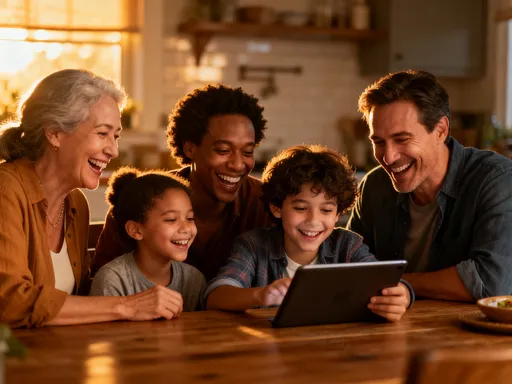
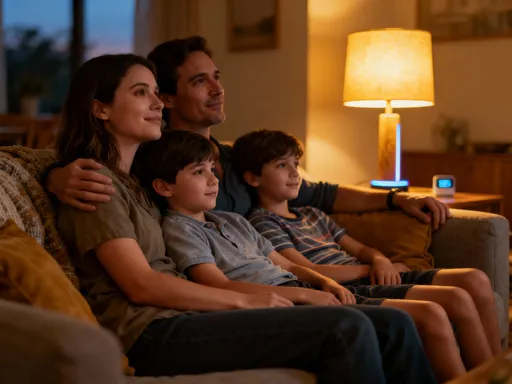
That night, I downloaded a language app for the first time. Just something simple — I thought I’d do a few lessons here and there, maybe keep up with her a little. But after a week of solo tapping on my phone after bedtime stories, I realized something was missing. I was learning, yes — but I was still alone. And then one evening, my son asked, “Why are you doing that every night?” I showed him the app, and he said, “Can I try?” That was the turning point. Instead of learning separately, we decided to learn together. We gathered around the kitchen table, phones in hand, trying to repeat phrases back to the app like we were on a game show. It was messy. We laughed more than we got things right. But for the first time, we weren’t just living under the same roof — we were growing together.
Technology didn’t create this shift — we did. But the right app gave us a shared space to do it. It turned screen time from something isolating into something unifying. And that small decision — to stop learning alone — changed everything. We weren’t chasing fluency anymore. We were chasing connection. And in that shift, we found something deeper: the joy of learning as a family, where every “bonjour” felt like a shared hello to a new version of us.
Why Shared Language Learning Strengthens Family Bonds
Language isn’t just grammar rules or vocabulary lists — it’s emotion, rhythm, and meaning. When we started learning as a family, we weren’t just picking up new words. We were building a new layer of connection. Think about it: when you learn how to say “I’m proud of you” in another language together, it doesn’t just translate — it deepens. It becomes a moment. My daughter still lights up when she hears me say “Je suis fier de toi” — not because of perfect pronunciation (far from it), but because she knows I’m saying it just for her.
There’s something powerful about struggling through a new phrase as a group. When we first tried saying “¿Cómo estás?” around the dinner table, my husband kept saying “¿Coma estás?” — which, as the app quickly pointed out, means “How are you eating?” We laughed until we cried. But that moment? It didn’t embarrass us — it bonded us. We weren’t just learning Spanish. We were creating memories. We were showing each other that it’s okay to be imperfect, that effort matters more than perfection, and that joy can come from the simplest mistakes.
What surprised me most was how much more we started listening to one another. Learning a language together made us more patient, more present. My son, usually in a rush to finish homework, would sit with me and repeat phrases slowly, helping me get the rhythm right. “Say it like this, Mom,” he’d say, gently correcting me. And in those quiet moments, I realized something beautiful: we weren’t just teaching each other words — we were teaching each other care.
Technology didn’t create these moments, but it gave us the tools to find them. The app became a bridge — not just between languages, but between hearts. And that, more than any vocabulary list, is what changed our family.
Choosing the Right Tools: What Works for Mixed Ages and Skill Levels
Let’s be honest — not every language app feels right for families. Some are too serious, like digital classrooms with pop quizzes and progress bars that feel like judgment. Others are too childish, full of cartoon animals that make teens roll their eyes. We tried a few before we found the ones that actually worked for all of us — ones that felt more like playing a game together than doing homework.
What made the difference? First, the app had to be flexible. It couldn’t assume we all had the same attention span or learning speed. My daughter loved the colorful lessons with speaking exercises, while I appreciated the short, five-minute sessions I could do while waiting to pick her up from soccer. The best apps adapted to us — not the other way around. They offered beginner tracks, but also let more advanced learners dive deeper. That meant my husband could review past lessons while my son started a new unit, all in the same app.
Another key feature? Voice recognition that didn’t punish mistakes. Early on, we used an app that would instantly correct us with a harsh “Incorrect” every time we slipped up. It felt discouraging — like we were being graded instead of growing. The one we stuck with? It gently repeated the correct pronunciation and said things like “Close! Try again.” That small shift in tone made a huge difference. It wasn’t about being perfect — it was about trying.
We also loved apps with shared progress features. Nothing motivates a kid like seeing their name on a family leaderboard. “Mom, I’m only three stars behind you!” my daughter would say, racing to finish her lesson. It wasn’t about competition — it was about belonging. We were all in it together, moving forward at our own pace but cheering each other on. And for a busy parent, that kind of encouragement is priceless. The right tool didn’t demand hours of focus. It welcomed five minutes of effort — and made those minutes count.
Turning Daily Routines into Language-Rich Moments
One of the biggest myths about learning a language is that you need big blocks of time — quiet study sessions, flashcards on the kitchen table, hours of practice. But for most of us, that’s just not realistic. Between school runs, work, and laundry that never ends, who has time for “dedicated learning”? What changed everything for us was realizing we didn’t need more time — we just needed to use the time we already had differently.
Breakfast, for example, became our “word of the day” ritual. Every morning, the app would suggest a simple phrase — “Good morning,” “I’m hungry,” “Where’s the milk?” — and we’d try to use it over toast and orange juice. At first, it felt silly. “Honey, pass the *mantequilla*,” I’d say, trying not to laugh. But soon, it became normal. Natural. My son started asking for his juice in Spanish before he even realized he was doing it. These tiny moments didn’t feel like learning — they felt like living. And that’s exactly why they stuck.
Car rides became listening adventures. Instead of everyone on their own devices, we played short stories or songs in our target language through the car speakers. “Can you hear the word for ‘cat’?” I’d ask. “Was it ‘gato’?” my daughter would shout from the back. We turned errands into games. At the grocery store, I’d hand my son the list and say, “Can you find the *pan*?” He’d race off, giggling, returning with a loaf of bread and a proud grin. Even bedtime got a twist — we started ending the day with a simple phrase like “I love you” in French or Spanish. “Je t’aime,” we’d say together, snuggling under the covers.
These weren’t grand lessons. They were small, joyful moments woven into the day. But over time, they added up. We weren’t just learning a language — we were living it. And the best part? Technology didn’t take us away from life. It helped us lean into it more fully. The app didn’t replace our routines — it enriched them.
How Understanding Grows Beyond Words — Building Empathy and Patience
One of the most unexpected benefits of learning a language together has been how it’s changed the way we relate to each other — not just in words, but in feelings. When you’re all struggling to pronounce “rhythm” in French (yes, that’s a real word — and yes, we butchered it), you become more patient. You listen more closely. You learn to celebrate effort, not just results.
I’ll never forget the day my son came home from school, frustrated. “No one understands me,” he said. Instead of jumping into problem-solving mode, I asked, “How do you say that in Spanish?” He looked surprised, then thoughtful. “No me entienden,” he said slowly. “Exactly,” I said. “And now you’ve said it in two languages.” That moment wasn’t about language — it was about empathy. By learning to express emotions in another tongue, he found a new way to be heard. And I found a new way to listen.
Learning together has also taught us that misunderstandings aren’t failures — they’re invitations to connect. When my daughter once said “Estoy embarazada” instead of “Estoy avergonzada” (a classic mix-up between “pregnant” and “embarrassed”), we didn’t scold her. We laughed — then talked about how words matter, and how easy it is to be misunderstood. That conversation led to a deeper one about feelings, about how we all sometimes say the wrong thing when we’re trying to express something hard.
The app didn’t teach us empathy directly — but it created the space for it. Every mispronounced word, every confused phrase, became a chance to practice patience, to slow down, to really hear each other. In a world that often feels rushed and disconnected, that’s a gift. And it’s one we didn’t expect — but now can’t imagine living without.
Making Mistakes Together — Why Imperfection Is the Real Breakthrough
Let’s be real — none of us speak perfectly. I once told a waiter in Spain that I “wanted to know the snow” instead of “I want to know the menu.” He looked confused, then kind. We both laughed. When I told my family, they didn’t judge me — they added it to our list of “Mom’s Classic Mix-Ups.” Now, when someone mishears something, we say, “Did you want to know the snow?” and burst out laughing. That moment didn’t ruin the trip — it made it memorable.
What I’ve learned is that perfection isn’t the goal — participation is. When we first started, I worried about sounding silly. What if I embarrassed myself? What if the kids thought I was bad at this? But then I realized: they weren’t judging me. They were inspired by me. Seeing me try — even when I failed — gave them permission to do the same. My daughter started singing French songs in the shower. My son tried writing his journal entries in Spanish. We weren’t aiming for fluency — we were aiming for courage.
The app became a safe space for that. It didn’t shame us for mistakes. It celebrated attempts. And over time, that changed how we saw ourselves. We weren’t “bad at languages.” We were learners — together. That shift in mindset made all the difference. We stopped seeing errors as setbacks and started seeing them as stories. Every wrong word became a memory. Every awkward phrase became a reason to laugh, to try again, to keep going.
And isn’t that what family is about? Not getting everything right — but staying connected, even when we don’t. Learning a language together taught us that growth isn’t neat or fast. It’s messy, full of stumbles and surprises. But when you do it with people you love, those stumbles become part of your story. They become proof that you’re trying — together.
A New Kind of Family Legacy — Growing Together, One Word at a Time
Today, we’re still learning. We’re not fluent. We still mix up words, laugh at our accents, and sometimes give up after five minutes. But something has shifted — something deeper than vocabulary or grammar. We’ve built a rhythm of growing together. Whether it’s sharing a new word at dinner or singing a silly song in French before bed, we’ve created a culture of curiosity in our home. And that, I believe, is the real legacy we’re building.
It’s not about being the family that speaks three languages perfectly. It’s about being the family that tries — together. That celebrates small wins. That laughs at mistakes. That shows up, even when it’s hard. In a world that often pulls us in different directions, this shared habit has become our anchor. It’s a daily reminder that we’re not just living side by side — we’re growing side by side.
The app didn’t change our lives because it had fancy features or AI tutors. It changed our lives because it gave us a reason to connect. It turned learning from a solitary task into a shared adventure. It reminded us that technology, at its best, doesn’t replace human connection — it deepens it. It doesn’t isolate us — it brings us closer.
So if you’ve ever looked at your phone and wondered, “Could this do more for us?” — I’d say yes. Not by scrolling, not by escaping, but by inviting. Invite your family in. Try a lesson together. Laugh at the mistakes. Celebrate the small wins. Because the most powerful thing we can teach our children isn’t a language — it’s the joy of learning together. And the most meaningful legacy we can leave isn’t fluency — it’s connection. One word, one moment, one “we’re in this together” at a time.