Lost and stressed every time you drive? How I finally tamed my navigation app chaos
We’ve all been there—frantically tapping a map while stopped at a red light, only to miss the turn again. I used to dread unfamiliar routes, feeling overwhelmed by confusing voice prompts and cluttered screens. It wasn’t just about getting lost; it was the stress, the wasted time, the arguments with passengers. But everything changed when I stopped fighting my navigation app and started truly using it. Now, driving feels calm, even predictable. This is how it became a seamless part of my daily life.
The Daily Chaos: When Maps Make Life Harder
How many times have you found yourself squinting at your phone screen, one hand on the wheel, the other tapping frantically as you try to make sense of a sudden turn you weren’t expecting? I know I have—more than I’d like to admit. It used to happen every time I left my neighborhood. Even a simple errand like picking up my daughter from her friend’s house in a new subdivision would send my heart racing. The app would say “in 500 feet, turn right,” but by the time I processed it, I’d already passed the street. Then came the reroute. That little voice, calm and unbothered, would say, “Recalculating,” as if it wasn’t just adding ten extra minutes to my drive and making me late for dinner prep.
It wasn’t just the wrong turns. It was the constant low-level anxiety that came with relying on something I didn’t fully understand. I’d glance at the screen too often, trying to anticipate the next move, and that split-second distraction made me feel unsafe. My kids would ask, “Are we there yet?” and I’d snap, “Not now!” not because I was mad at them, but because I was overwhelmed. The irony? This tool was supposed to make life easier. Instead, it added stress. I’d arrive at my destination feeling drained, like I’d just run a mental marathon. And I know I’m not alone. So many women I talk to—moms, professionals, caregivers—tell me the same thing: they use their navigation apps every day, but they don’t trust them. They don’t feel in control. And that lack of control eats away at your peace, especially when you’re already juggling a million things.
The real problem wasn’t the app. It was how I was using it—or rather, how I wasn’t really using it at all. I treated it like a magic box that should just work perfectly every time, without any effort on my part. But like any tool, it works best when you understand how to work with it. Once I started seeing it not as a source of frustration but as something I could learn to partner with, everything began to shift.
Breaking Point: One Wrong Turn That Changed Everything
The moment everything changed wasn’t dramatic, but it hit hard. I had a doctor’s appointment across town—one I’d been rescheduling for weeks. I punched the address into my app, set off with plenty of time, and even started listening to a podcast to relax. But halfway there, the app rerouted me for “traffic ahead.” I trusted it, turned off the highway, and found myself on a narrow side street with no clear signs. The voice said, “Turn left in 300 feet,” but the street was unmarked, and I missed it. By the time I realized, I was completely turned around. I ended up arriving 25 minutes late. The receptionist gave me that look—the one that says, “You should’ve planned better.” I wanted to cry. Not because of the appointment, but because I felt so powerless. I’d done everything “right,” and still, I’d failed.
That night, I sat in my car after dropping the kids off at soccer practice, just breathing. I thought about how many times I’d blamed the app, blamed the traffic, blamed the confusing roads. But this time, I asked myself a different question: What if the problem wasn’t out there—but in how I was using the tool? That’s when it clicked. I wasn’t using the app with intention. I was just reacting to it. I’d never taken five minutes to learn how it actually worked. I didn’t know how to set preferences, save locations, or even adjust the voice volume. I was treating it like a passenger who should read my mind, instead of a co-pilot I needed to communicate with.
That realization was a turning point. Instead of feeling defeated, I felt curious. I started asking, “How can I get better at this?” I looked up a few simple settings, watched a short video, and tried them the next day. The difference wasn’t instant, but it was real. For the first time, I felt like I was in charge. And that small shift—from frustration to curiosity—opened the door to real change.
Learning the Rhythm: Treating Navigation Like a Co-Pilot
Here’s the truth I wish someone had told me sooner: your navigation app isn’t just a map. It’s more like a thoughtful travel companion—one that’s always paying attention, always ready to help, but only if you let it. I started thinking of it as my co-pilot, not just a screen on my dashboard. And just like you wouldn’t ignore a real person giving you directions, I learned to listen, anticipate, and trust.
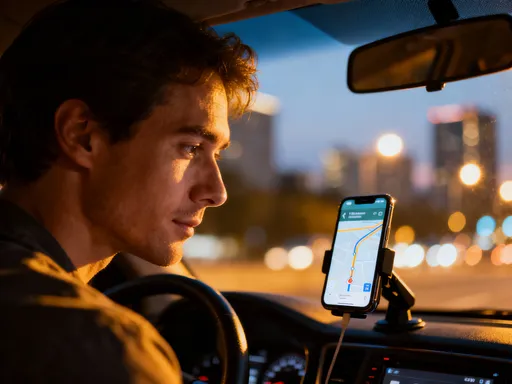
One of the first things I changed was how I prepared before driving. Instead of typing in the address while I was already moving, I started doing it while the car was still parked. I’d take a minute to review the route, check for any long stretches or tricky intersections, and even say the directions out loud to myself. It sounds simple, but it made a huge difference. My brain was ready. When the voice said, “In 800 feet, turn right,” I wasn’t startled. I was already expecting it.
I also learned to trust the lane guidance feature. At first, I ignored those little arrows at the top of the screen that showed which lane to be in. I thought, “I know where I’m going.” But then I missed a highway exit because I was in the wrong lane. Now, I pay attention. That small blue arrow? It’s like a gentle nudge from a friend saying, “Hey, you’ll want to move over now.” And when I do, I feel a little more in control. I also started noticing the timing of the voice cues. They usually come about 15 seconds before a turn—enough time to react, but not so early that you forget. Once I understood that rhythm, it felt less like chaos and more like a conversation.
Think of it like dancing. At first, you’re stepping on your partner’s toes because you’re not in sync. But the more you practice, the more natural it feels. That’s what happened with my app. I stopped fighting it and started moving with it. And suddenly, driving wasn’t something I dreaded—it was something I could actually enjoy.
Small Tweaks, Big Calm: Customizing for Real Life
You don’t need to be a tech expert to make your navigation app work better for you. In fact, the most powerful changes are the simplest ones—small adjustments that fit right into your daily routine. I started with the basics: I saved my home, my kids’ school, my gym, and my favorite grocery store as “favorites” in the app. Now, instead of typing in the same addresses every week, I just tap one button. It saves seconds each time, but those seconds add up—especially when you’re juggling bags, kids, and a phone while trying to get into the car.
Another game-changer was turning on traffic-based routing. I used to ignore it, thinking, “I know the fastest way.” But the app knows more than I do. It’s pulling data from thousands of other drivers in real time. Now, if there’s an accident or construction ahead, it quietly guides me around it—often before I even know there’s a problem. I used to think reroutes were a sign of failure. Now I see them as a gift. Last week, it rerouted me around a school bus parade I never would have anticipated. I arrived ten minutes early and actually had time to grab a coffee.
I also silenced non-essential notifications during drives. No social media pings, no email alerts—just the app and my music. That small boundary helped me stay focused and calm. And I adjusted the voice volume so it was clear but not startling. I even picked a voice that sounded warm and familiar—like a friend giving advice, not a robot barking orders. These tweaks didn’t take more than ten minutes to set up, but they transformed my experience. I wasn’t just using the app anymore—I was living with it, in a way that supported my rhythm, not disrupted it.
Family on Board: Making Navigation Work for Everyone
One thing I didn’t expect was how much smoother family trips became once I got better at using the app. My kids used to groan when I said, “Let’s go,” because they knew it meant I’d be stressed, distracted, and probably taking a wrong turn. Now, they’ll say, “Mom, the app says turn left in two blocks,” and I smile. They’ve started paying attention too. On long drives, we’ll talk about the route together. “Looks like we’ll go through the park,” I’ll say. “Cool,” my son replies. “We can stop and feed the ducks on the way back.”
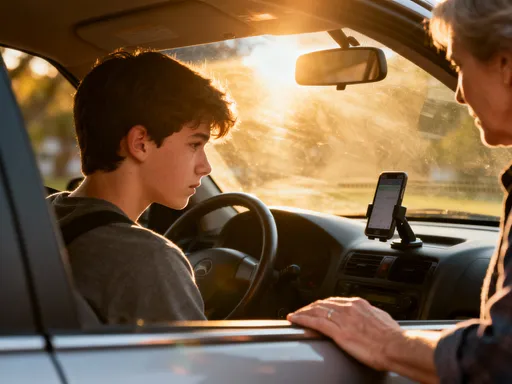
It’s become a subtle way to teach them about planning and awareness. I’ll point out how the app shows traffic in different colors—green for clear, yellow for slow, red for stopped. “See that red line?” I’ll say. “That means we might want to leave a little earlier tomorrow.” They’re learning to think ahead, just like I am. And when my teenager started driving, I showed her how to use the app responsibly—setting it up before she leaves, using voice commands, and keeping her eyes on the road. It’s not just about getting from point A to B. It’s about building confidence and independence.
There’s also less tension in the car. No more “You missed the turn!” from the backseat. Instead, we laugh when the app says something funny—like “You have arrived… at your destination” in a cheerful tone, even when we’re just pulling into the driveway. It’s become part of our family rhythm, a quiet helper that keeps us connected and moving forward together.
Beyond Driving: How Smarter Routes Gave Me Time Back
The biggest surprise wasn’t just fewer wrong turns—it was how much time I gained. Not just minutes, but mental space. I used to arrive at events feeling frazzled, rushing in with my hair half-done and my mind still replaying the drive. Now, I often arrive early. And those extra minutes? I use them to breathe, to listen to the end of a song, to call a friend, or just sit quietly. It’s become a little pocket of peace in my day.
I’ve also avoided so many stress-induced meltdowns—mine and my kids’. No more arriving at soccer practice with tempers flaring because we got lost. No more rushing into birthday parties with half-eaten snacks because we were cutting it too close. The predictability has brought a sense of calm to our whole schedule. I’ve even started planning weekend outings to places I used to avoid because they seemed too complicated to navigate. Last month, we went to a lakeside park an hour away. I would’ve said no a year ago. Now? I looked it up, saved it, and drove there with zero anxiety.
And here’s the thing: that time and calm aren’t just about driving. They ripple into everything. I’m more patient. I’m more present. I have more energy for the people I love. I’m not exaggerating when I say that learning to use my navigation app better gave me my afternoons back. It’s a small change, but it’s had a big impact on my emotional well-being.
A New Normal: When Getting There Feels Effortless
Now, using my navigation app feels like second nature. It’s no longer a source of stress—it’s a quiet ally. I don’t think about it much anymore, which is exactly how it should be. The best tools fade into the background, doing their job without demanding attention. I still have the occasional surprise detour, but instead of panicking, I just say, “Okay, let’s see where this takes us,” and trust the process.
This journey wasn’t about becoming a tech whiz. It was about reclaiming my calm, my time, and my confidence. It was about realizing that small, intentional changes can transform even the most routine parts of life. And it reminded me that self-care isn’t always about spa days or long walks. Sometimes, it’s about taking ten minutes to set up an app so you can feel more in control. It’s about giving yourself the gift of ease.
If you’ve ever felt lost—literally or figuratively—while driving, I want you to know: it doesn’t have to be that way. You don’t have to white-knuckle your way through every trip. With a few simple shifts, your navigation app can become a true partner, helping you move through the world with more grace and less stress. It’s not magic. It’s just smart, thoughtful use of a tool you already have. And when you get it right, the road ahead feels a lot smoother—not just for your car, but for your heart and mind too.